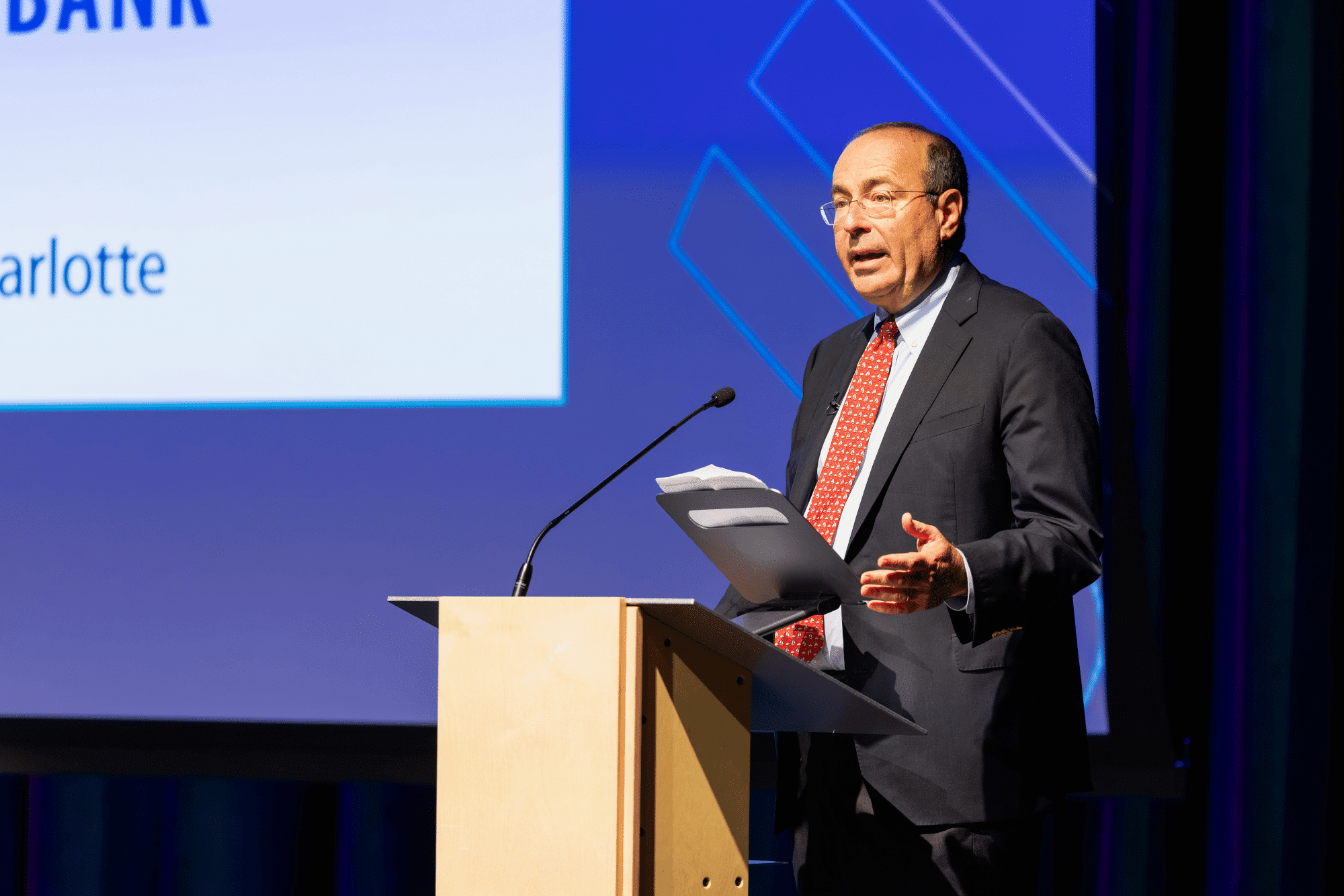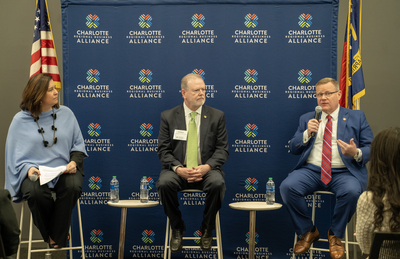
North Carolina Senate President Pro Tempore Phil Berger and Speaker of the House Tim Moore visited the CLT Alliance to reflect on the successes of the 2023 legislative session and outline their legislative priorities for 2024. Lauren Woodruff, CLT Alliance Advocacy Committee Chair and Bank of America SVP of Government Relations, moderated the conversation.
Looking back at the 2023 legislative session, both leaders discussed significant wins, such as Medicaid expansion and the approval of sports wagering. These victories were in alignment with CLT Alliance priorities and are poised to have significant economic impacts on the state.
Both leaders expressed how Medicaid expansion will allow the state to leverage federal funds, thereby supporting hospitals, alleviating pressure on private health insurance, and easing the burden on healthcare providers and taxpayers.
Berger highlighted the economic potential of sports wagering, foreseeing job growth and the growth of state tax revenue. Both Berger and Moore emphasized the economic development impact of sports on the state. In addition to sports wagering, the retention of the Atlantic Coast Conference (ACC) in the state will help drive visitor spending.
Moore emphasized the role of sports investments in North Carolina, citing benefits such as employment opportunities, boosts to the hospitality industry, and enhanced state branding. He also voiced his appreciation for sports teams and leagues leading on this issue.
Education remains a shared priority for both leaders, with Moore spotlighting recent investments in the region’s community colleges and universities. Moore highlighted data science investments at UNC Charlotte, emphasizing the significance of the university’s data science research for the Charlotte region and the state.
Berger shared his commitment to continued investments in K-12 education, particularly for reading initiatives to address the state’s literacy rates and additional training for elementary level teachers.
Addressing the critical issue of child care, Berger discussed increased funding in the state’s child care ecosystem, and the importance of an innovative community-centric approach. Moore acknowledged postpandemic shifts in workforce practices and suggested potential solutions such as cost-sharing arrangements among employers, parents, and the government. Both leaders emphasized the importance of a robust child care system for the state’s future growth and workforce.
The leaders discussed another critical need in the region, enhanced mobility options. Berger stressed the need for effective transportation and mobility planning saying, ‘transportation is one of those issues that a growing state has to get right.’
The leaders agreed that the region’s residents and businesses benefit from Charlotte Douglas International Airport, which is ‘an incredible economic generator,’ according to Moore.
Both leaders know that efforts at enhancing mobility options will require a collaborative effort between state and local governments, with input from the business community as well.