Is Charlotte a sports town? The question has come up often over the last year, and more people are beginning to answer it with a yes as the Carolina Panthers returned to the playoffs and the Charlotte Hornets are showing renewed energy.
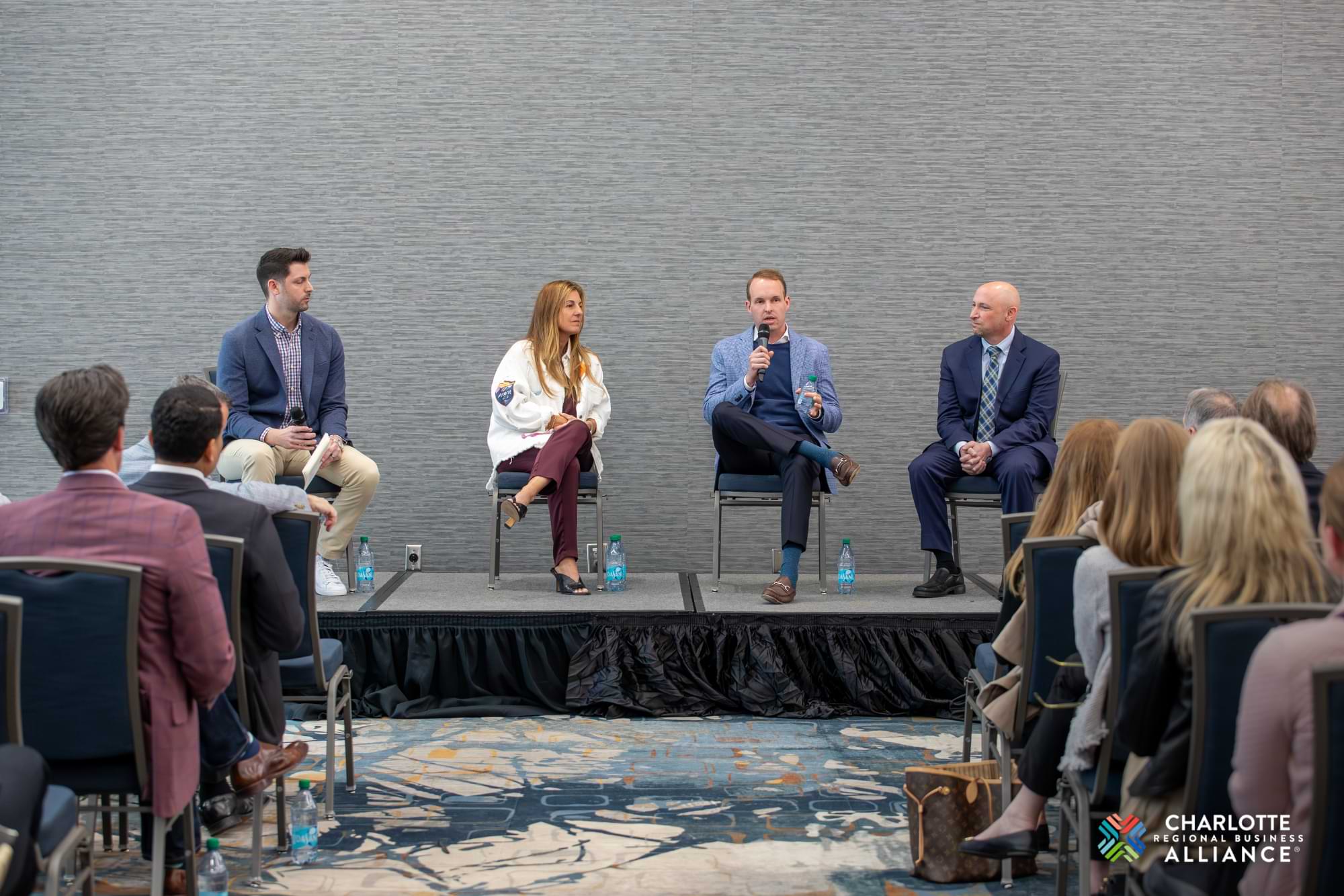
Leaders from across Charlotte’s sports ecosystem are working to expand that narrative beyond just two teams. In a conversation at the BOplex in east Charlotte, Christian Bochicchio, PR Manager for Sports & Entertainment at Ally Financial, discussed the Charlotte Region’s sports identity with three executives: Andy Kaufman, CEO of Zawyer Sports & Entertainment, which owns the Charlotte Checkers and newly formed Charlotte Crown; Kimberly Lewis, minority owner of the Carolina Ascent; and Henry Shepherd, chief strategy officer for Diamond Baseball Holdings, which owns the Charlotte Knights and the Gastonia Ghost Peppers.
Community support
Across the conversation, one theme came up again and again: community support.
Lewis talked about buying the Carolina Ascent, saying they wanted all-female ownership so women were supporting women.
“Let’s show the ladies on the field that there are women invested in their sport,” she said.
She said while there was a lot of hype and excitement for the Ascent’s arrival, it’s been a challenge to maintain. Attendance has declined since the team’s inaugural season.
“We are really going to be reliant on all of you on helping make sure this team stays here,” she told the business community in the room.
Bochicchio asked Shepherd what went into purchasing the Charlotte Knights. Shepherd said the Knights were already one of the most successful teams in the history of minor league baseball. He said he wants Truist Field to be a community asset in addition to the home of the Knights, driving people to the ballpark for an “elite, differentiated experience.”
Kaufman echoed the sentiment around community involvement. He said the Charlotte Checkers have a legacy that he and Zawyer Sports have worked to preserve, adding that the Checkers are the only AAA hockey team in the South. They’re also committed to bringing year-round programming to the community, with a focus on getting kids out on the ice.
The Ascent is also investing beyond the field, focusing on philanthropic efforts like supporting Dress for Success and sponsoring girls’ soccer. In addition, they’re focusing on their players.
Lewis said their athletes aren’t making a lot of money, so they’re focusing on setting them up for retirement. To her, it’s about answering one question: How do you let them play the sport they love and then help them successfully move into the professional world? A lot of that has to do with retention in Charlotte, she said.
Kaufman and Shepherd talked about investments needed in each of their facilities. They’re making incremental repairs, but the BOplex and Truist Field need huge investment “down to the bones,” as Kaufman put it. They plan to work with public and private partners to make that happen.
Reaching potential
Bochicchio asked if each executive could look five years into the future, what would reaching their team’s full potential look like?
“Winning the playoffs,” Lewis joked, adding later that, “In five years, success to us looks like building a community around the Carolina Ascent.”
She said that includes fans, businesses, and other community members.
“[Success is when] we have a thriving team for both men and women in every major sport,” Kaufman said.
Ultimately, the discussion reinforced that Charlotte’s future as a sports city won’t be defined by wins and losses alone, but by the strength of its fan base, investment in its teams, and the people who show up to support them.