By now, it’s clear that artificial intelligence can automate broken processes, personalize service at scale, and put enormous computing power in every pocket. But two Truist leaders agree that none of it works without humans exercising judgment.
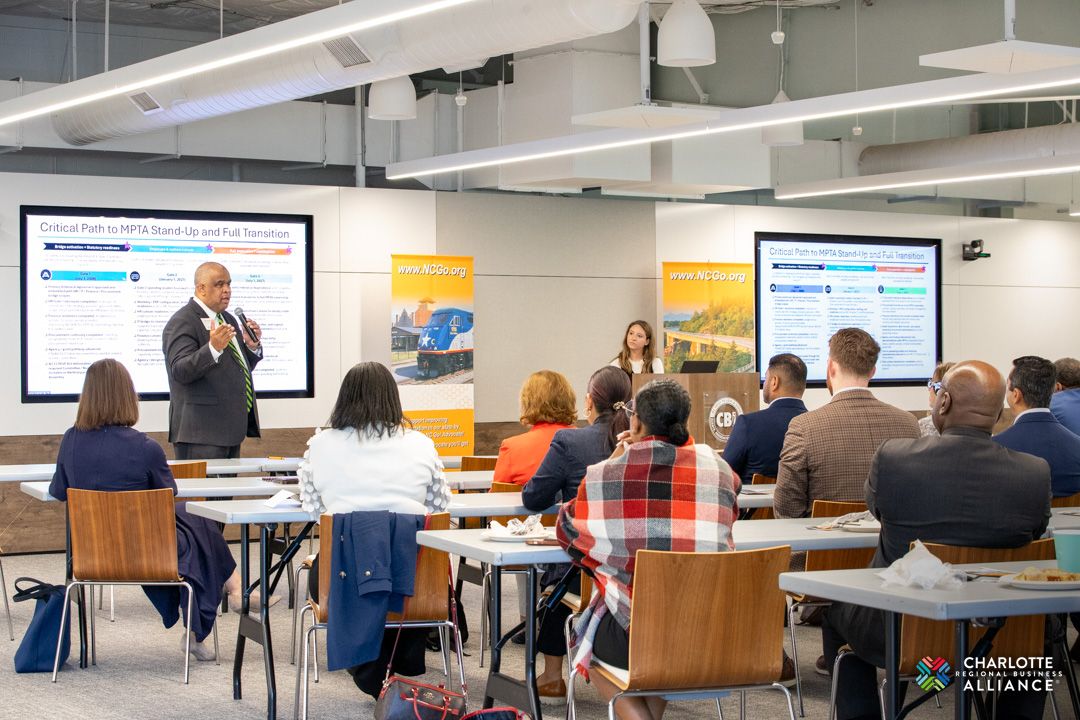
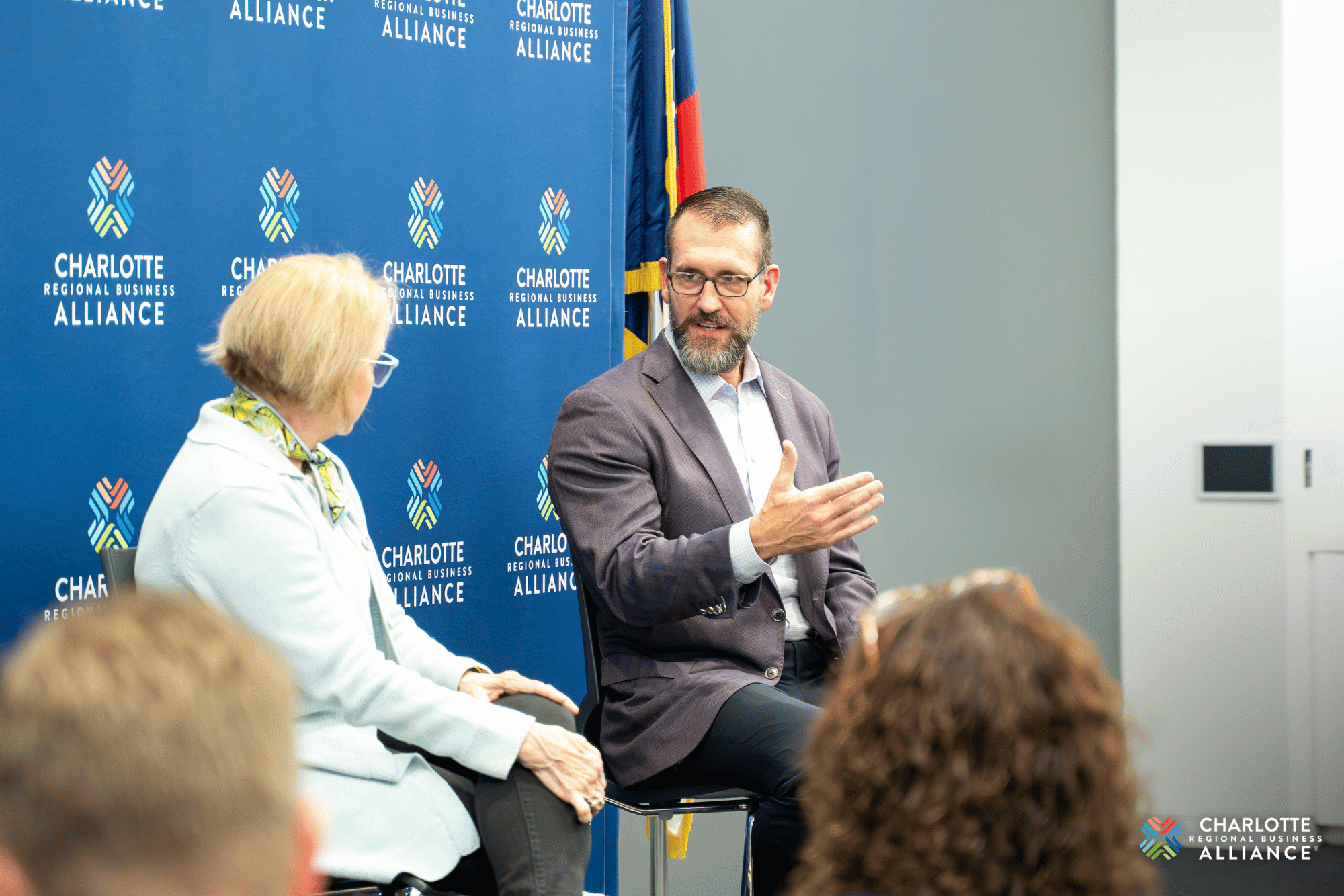
Truist Chief Technology and Operations Officer Steve Hagerman and Truist Board of Directors member Cathy Bessant sat down for a fireside chat at the Charlotte Regional Business Alliance to explore how AI is transforming business, reshaping the workforce and creating new ways to serve clients and communities. Their conversation balanced optimism with caution, returning again and again to one theme: humans must stay in the loop.
Stripping away the mystique
Bessant pushed back on the aura that often surrounds the technology.
“AI is data and models,” she said. “The mystique around AI is something I try hard to work against.”
She framed the relationship between people and machines in simple terms.
“AI is our agent but not our administrator,” Bessant said, stressing that humans must remain in control of outcomes.
Hagerman acknowledged that this control has grown harder to maintain. Earlier systems produced predictable outputs, he explained, while newer models prove far more difficult to govern. At the same time, their reach keeps expanding.
“All of us have more power in our pocket than what it took to land humans on the moon,” he said, pointing to how AI now democratizes skills like software engineering. “Now what?”
A faster path to better processes
For Hagerman, one answer to “now what?” lies in fixing what already slows companies down. AI agents can take on inefficient processes and streamline them directly, he said, removing the long transformation journeys businesses once had to plan.
He also sees a major opening for business leaders who own a profit and loss statement. Signals such as geolocation, email activity and financial data can fuel hyper-personalization at scale, which Hagerman called a huge business opportunity.
Bessant urged leaders to weigh that opportunity carefully.
“How do we leverage it, and what do we want to avoid?” she asked.
Security and safety
Hagerman separated AI risk into two distinct areas. The first, AI security, concerns technologists defending against new threats. He cited Microsoft’s report of the first agentic cyberattack carried out start to finish, an attack that once would have taken three months and instead unfolded in hours.
The second area, AI safety, centers on ethics: how companies train their models, how they address bias, and what conditions should trigger a kill switch. Business leaders need to understand those questions, interrogate them and explain their answers, Hagerman said.
Agents are already showing up in everyday operations. Bots now call into customer call centers, according to Hagerman. Bessant added that clients and customers will need a reliable way to know whether the agent communicating with them is legitimate and whether a human stands behind it.
“The detection tools have to evolve at the same pace that these tools evolve,” Hagerman said.
Using AI as a tool
Bessant challenged commercial leaders to think about how to turn technological advances into value for clients. That task comes with an obligation to use AI responsibly and to define a clear chain of accountability. Bessant described the work as both a challenge and an opportunity.
Hagerman pointed to how quickly the ground keeps shifting. Personal agent protocols, which he said emerged only weeks earlier, set standards for agentic interactions between consumers and businesses and between companies. Those standards could let organizations keep legacy technology while adding a new agentic interface, and the landscape could change considerably over the next few months as companies learn how to commercialize it.
Bessant’s advice for getting started was direct.
“Try it,” she said. “Experiential learning has been so important to my understanding of its applicability.”
Judgment as the skill that lasts
Through it all, Bessant said, “the human factor could not be more important.” She encouraged leaders to use their judgment and stay skeptical. Capture the opportunity while maintaining authority and accountability.
When an audience member asked which human skills will matter most in the future, both speakers gave the same one-word answer: judgment.
Hagerman emphasized keeping people in the loop on questions of judgment, bias, and safety. Bessant described AI as a tool, not a destination. Hagerman summed it up in a single line:
“It starts with judgment, ends with accountability.”
The conversation closed where it began. AI will keep accelerating, and the organizations that benefit most will pair that speed with human oversight, sound data, and clear accountability.