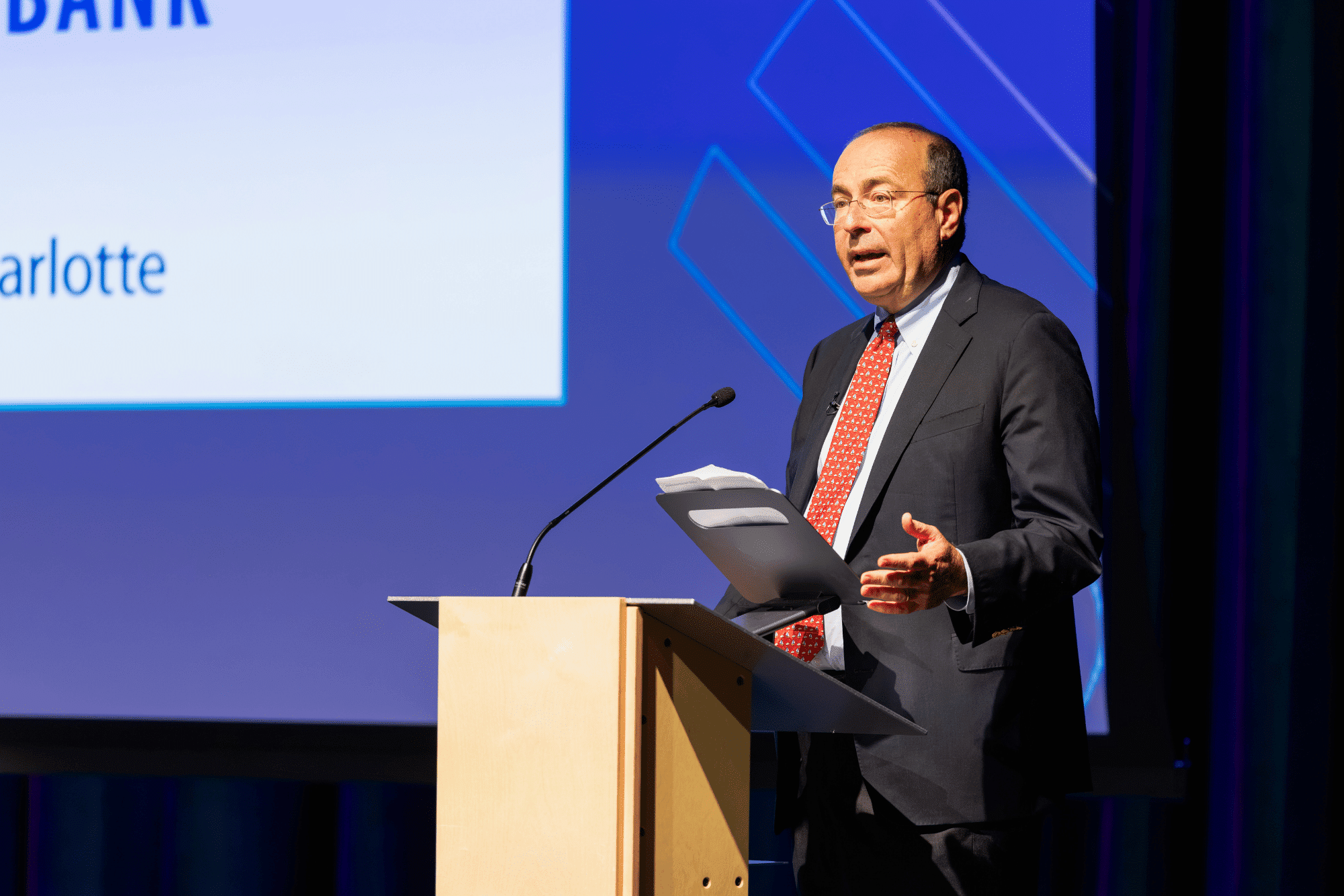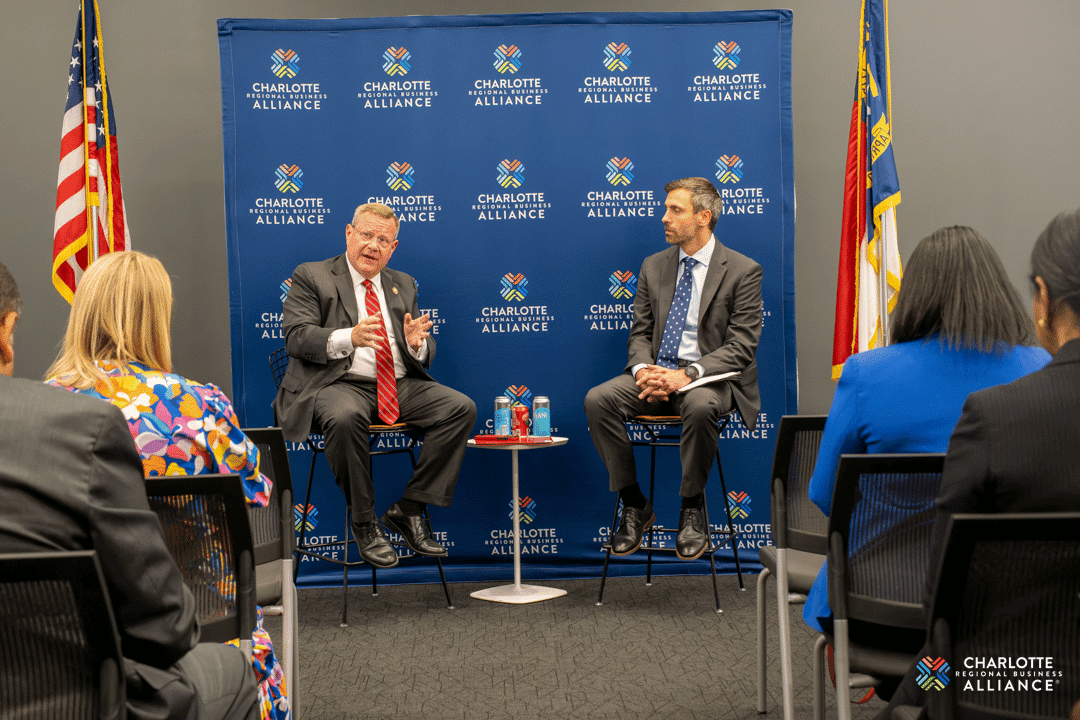
The Charlotte Region’s business community met with Congressman Tim Moore in October as part of the Charlotte Regional Business Alliance’s Advocacy in Action series. Matthew Panik, chief advocacy officer at the CLT Alliance, moderated the conversation with Moore.
Moore is wrapping up his first term representing North Carolina’s 14th Congressional District in the House of Representatives, where he serves on the House Committee on Financial Services and House Committee on the Budget. He shared his legislative accomplishments and his outlook on continued economic growth in the Charlotte Region.
Moore spoke about the progress of Hurricane Helene recovery in his district, which remains ongoing. He pointed to the more than $2.5 billion that has been reimbursed by the federal government and the need for additional federal funding to be appropriated by Congress.
He emphasized infrastructure investments in the region, with a focus on the need for road construction and traffic improvement. Moore also stressed the importance of the Charlotte Douglas International Airport to communities in his district, including excitement for the new upgrades coming to the airport.
Moore also shared updates from his work on the House Committee on Financial Services. His bill, the TRUST Act of 2025, was passed unanimously by the House and modernizes outdated banking regulations by raising asset limits and allowing community banks to better serve consumers.
The congressman reflected on his time as speaker of the North Carolina House of Representatives and the strides that North Carolina has made since 2010 in growing the state’s economy, while lowering taxes and stabilizing spending. He hears from his colleagues from all over the country who recognize the Charlotte Region’s growth and its increasing role as a major economic center.
Looking ahead, Moore expressed optimism for the Charlotte Region’s continued growth and the direction of North Carolina. He spoke about his ability to bring home millions of federal dollars each year through Community Project Funding, and the bipartisan legislative work he can continue to accomplish in Congress.